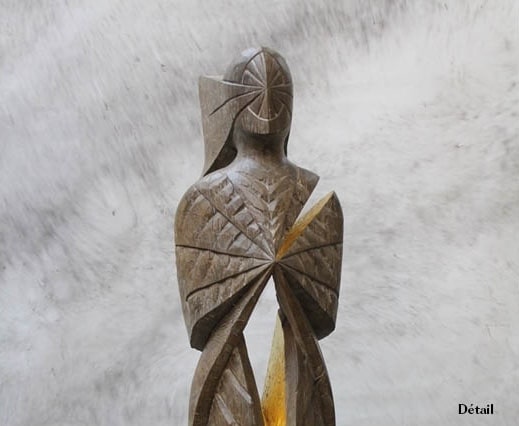
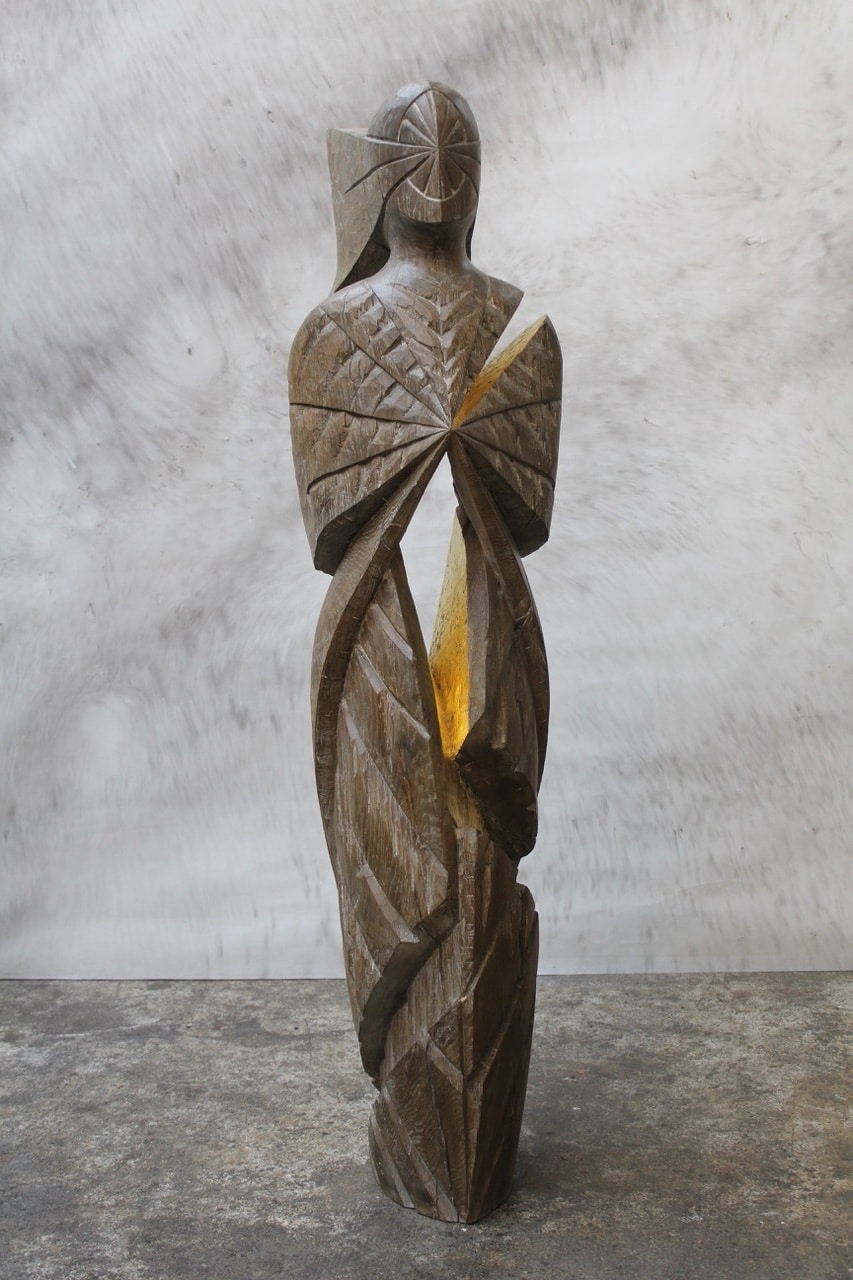
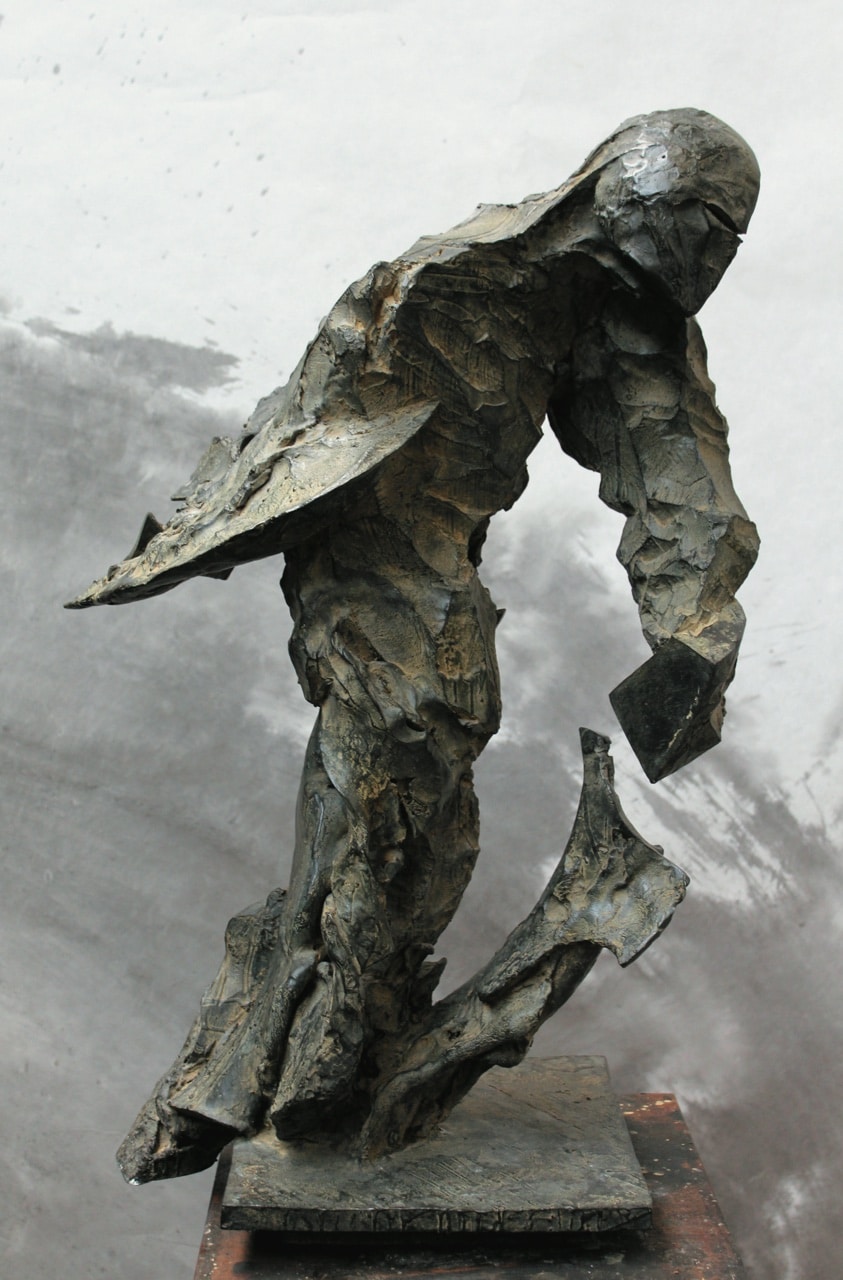
Born in Brussels in 1958 into a family of artists, Nicolas Alquin studied the restoration of works of art at the Museum of Popular Arts and Traditions before working in the studios of sculptors Reinhoud d’Haese and Étienne Martin. He developed his artistic vocabulary around three principal materials and techniques: wood, carved directly; beeswax, carved and modelled in the mass (sometimes cast in bronze); and sepia or black ink, used for brush washes.
Working against the principles of post-minimalist sculpture, he developed a practice that reinterprets, with considerable intensity, the history of art, drawing on both marginal references and the major history of sculpture. In an ongoing dialogue between the Judeo-Christian heritage and the influence of non-Western and Indigenous arts on contemporary art, Nicolas Alquin’s works embody a reflection on the relationships between the visible and the ineffable, the hand and the spirit, and mastery and chance.
He does not hesitate to appropriate so-called “traditional” techniques — above all direct wood carving and bronze chiselling — infusing them with diverse influences and placing them within a new perspective.
From a text by Marc Bembekoff